Case Study: Distributed Infrastructure Architecture
Because "always-on" shouldn't rely on hopeful guesswork
A UK telecoms provider redesigned its core network architecture to withstand provider failure, absorb demand spikes, and scale without fuss - all while customers carried on making calls.
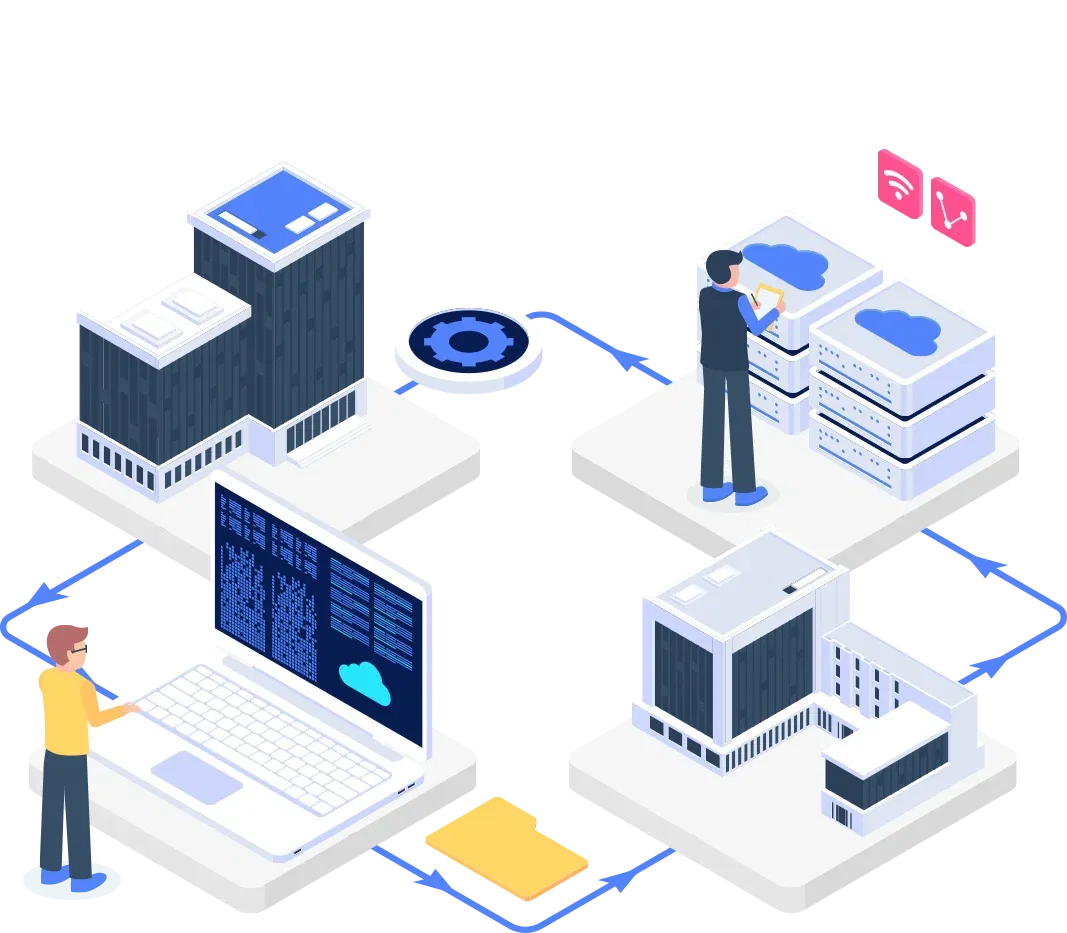
A Business Built on Availability
The client is a UK-based provider of business telecoms and virtual phone number services. In their market, reliability is not a differentiator - it is the entry requirement. Customers expect voice and numbering services to function continuously, regardless of upstream turbulence.
Yet the platform underpinning these services had grown within the confines of a single hosting provider. While stable under normal conditions, this architecture created structural exposure. In a service category defined by availability, the ability to survive infrastructure-level disruption became operationally critical.
The Hidden Fragility of "Working Fine"
Day to day, the system performed. But its resilience was largely theoretical.
- A single hosting dependency meant that any provider-level incident had the potential to impact the entire customer base.
- Scaling capacity required manual provisioning and lead time, making demand surges operationally uncomfortable rather than routine.
- Faults were not gracefully handled; they escalated.
- Growth was possible, but not elastic.
- The cumulative risk profile was clear: one failure mode, one blast radius.
An Architecture Designed to Carry On
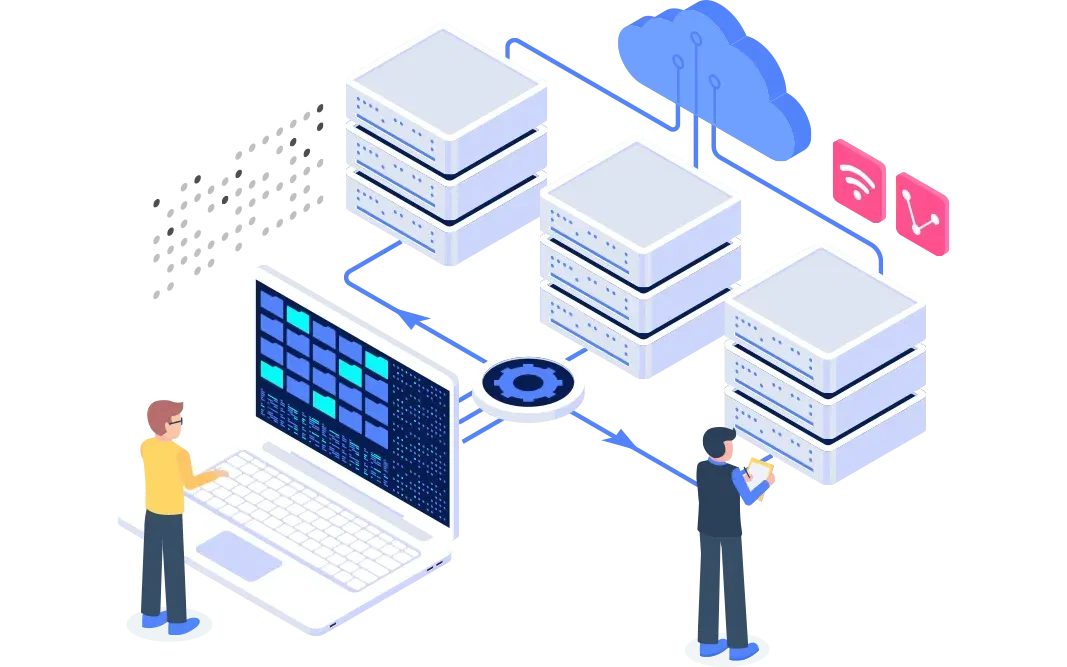
We re-engineered the platform to operate across multiple data centres and hosting providers, deliberately removing the notion of a single point of failure.
Workloads were distributed across environments, with failover built in from inception rather than appended as an afterthought. Applications were containerised using Docker to ensure consistent deployments across providers, reducing configuration drift and enabling repeatable, low-risk releases.
For data resilience, MariaDB multi-master replication ensured critical records could be written and synchronised across nodes in real time. ETCD provided dependable configuration coordination across the distributed cluster. The intent was straightforward: continuity under stress, and scale without reinvention.
"Previously, a single outage could disrupt the whole operation. The redesigned architecture reduced that risk and made availability far more consistent for customers."
This reflected the experience of teams responsible for keeping services live - not just the theory presented in an architecture diagram.
Built for the People Running It
For operations teams, the shift was tangible. Capacity could be introduced in minutes rather than scheduled as a minor event. Failover became an automated safeguard rather than a crisis response.
For engineering teams, containerisation eliminated environment inconsistencies between providers. Deployments followed a repeatable pattern, reducing last-minute configuration surprises.
For leadership, the architecture introduced measurable control. Redundancy was demonstrable, failover paths were validated, and infrastructure decisions could be guided by cost-performance balance rather than dependency.
Change Without Interruption
This was not a disruptive migration. The transformation was introduced incrementally, allowing services to continue operating while resilience was layered in.
In the end, it was a decisive switch. The business cut over completely and retired the old single-provider arrangement once resilience was verified.
Results That Withstood Scrutiny
The operational impact was measurable and sustained:
- Unplanned outages reduced by over 96%, materially improving service continuity.
- New server capacity deployed in minutes, enabling confident response to demand surges.
- Annual hosting costs reduced by 24%, achieved by balancing workloads across providers rather than relying on a single premium footprint.
The results delivered rare alignment: improved reliability, agility, and cost efficiency.
From Reactive to Resilient
Beyond the metrics, the business experienced a behavioural shift. Incidents became rarer and less severe. Scaling ceased to be an event requiring preparation and became an operational norm.
The platform evolved from a system that coped under pressure to one that expected it - and carried on regardless.
Client feedback has been paraphrased from direct discussions. Names, roles, and identifying details have been anonymised to protect confidentiality.
Infrastructure That Keeps Its Nerve
Resilience needn't be theatrical. Sometimes it is simply the quiet confidence of knowing one failure will not undo the rest.